
Understanding HS Classification
Learn what the Harmonised System is, how goods are classified using the General Interpretative Rules, and how the ASEAN Harmonised Tariff Nomenclature supports uniform classification across ASEAN.
Last updated 23 February 2026
On this page
What is the Harmonised System?
The Harmonised Commodity Description and Coding System (HS) is an international goods classification system developed by the World Customs Organization (WCO). It provides a standardised 6-digit nomenclature used globally for the classification of goods.
Structure of the HS
The HS consists of 21 Sections and 97 Chapters, organised according to product type and degree of manufacture. Its structure includes:
Section and Chapter Notes, including subheading notes
A systematic list of 4-digit headings, further divided into subheadings
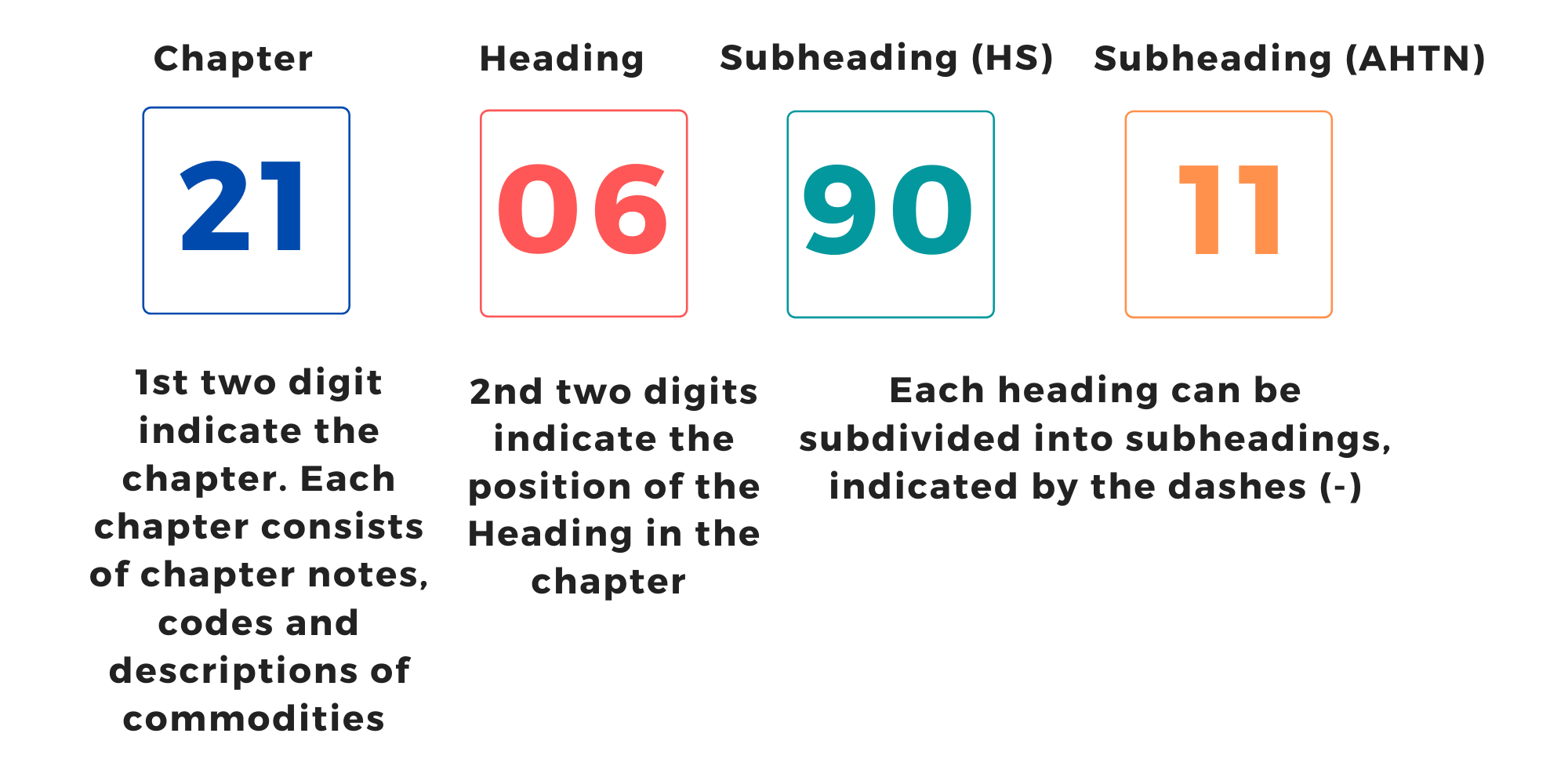
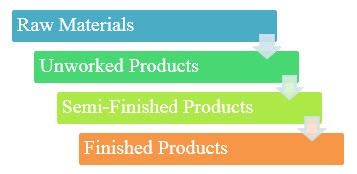
Goods must first be classified in the 4-digit HS heading, followed by the appropriate 1-dash subheadings, And the appropriate 2-dash subheadings and so on. Classification must not begin at lower-level subheadings. As shown in the infographic below, the goods in the HS are arranged in order of their degree of manufacture. The same order is arranged within each Chapter and its headings.
How the Classification Process Works

ASEAN Harmonised Tariff Nomenclature
The ASEAN Harmonised Tariff Nomenclature (AHTN) is an 8-digit HS nomenclature used by all ASEAN Member States,based on the WCO 6-digit HS.
The most recent amendment to the AHTN was made in 2022, incorporating all 351 sets of HS 2022 changes.
Singapore’s current tariff schedule is published in the Singapore Trade Classification, Customs and Excise Duties (STCCED) 2022.
Refer to the highlights of the key amendments.
Courses and Self-Learning Resources
SC 102 – Classification and the HS
You may register for the SC 102 course to learn the fundamentals of HS classification and gain a deeper understanding on the classification of goods and the HS.
Handy Guides
E-Learning Modules (MCQs)
Explore MCQs covering more than 30 HS Chapters, including goods such as:
Food and beverages
Chemical preparations
Plastic articles
Machinery and equipment
Answers and classification rationales are available online.